
Architecture12 articlesEN · DE
System design and software architecture — the trade-offs that last
Architecture is not diagrams — it is the small set of decisions that are expensive to reverse, made well. This hub covers those decisions: monolith vs microservices, event-driven messaging and queues, consistency and the CAP theorem, domain-driven design, idempotency and rate limiting — plus reference architectures for GKE and sovereign cloud. Across 12+ years building platforms at scale, I have learned good architecture is mostly owning trade-offs honestly.
Start here
Your path through Architecture
A short reading order — from the fundamentals to production depth.
Articles in this hub

The Outbox Pattern: Reliable Events Without Distributed Transactions
Saving data and publishing an event are two writes to two systems, and no retry can make them atomic. The transactional outbox writes the event in the same database transaction and ships it afterwards. Schema, polling vs CDC with Debezium, idempotent consumers, ordering and operations.
Read article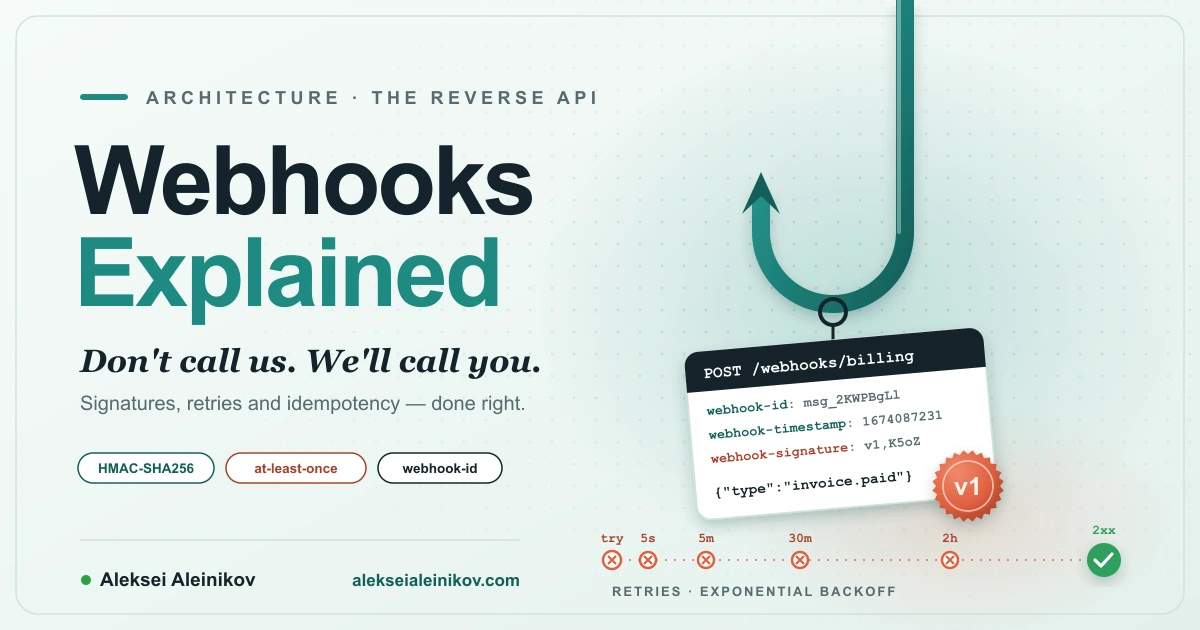
Webhooks Explained: How They Work, How to Secure Them, How to Scale Them
What a webhook is, how it compares with API polling and WebSockets, how Stripe, GitHub, Shopify and Slack sign and retry their deliveries, how to verify HMAC signatures without the classic raw-body bug, and how to receive and send webhooks reliably at scale.
Read article
Scalability: The Bottleneck Is Almost Never the CPU
Why CPU sits at 30% while your service times out: the utilisation knee, connection pools, ephemeral ports, coordinated omission in your load tests, and the commands that find the binding constraint.
Read article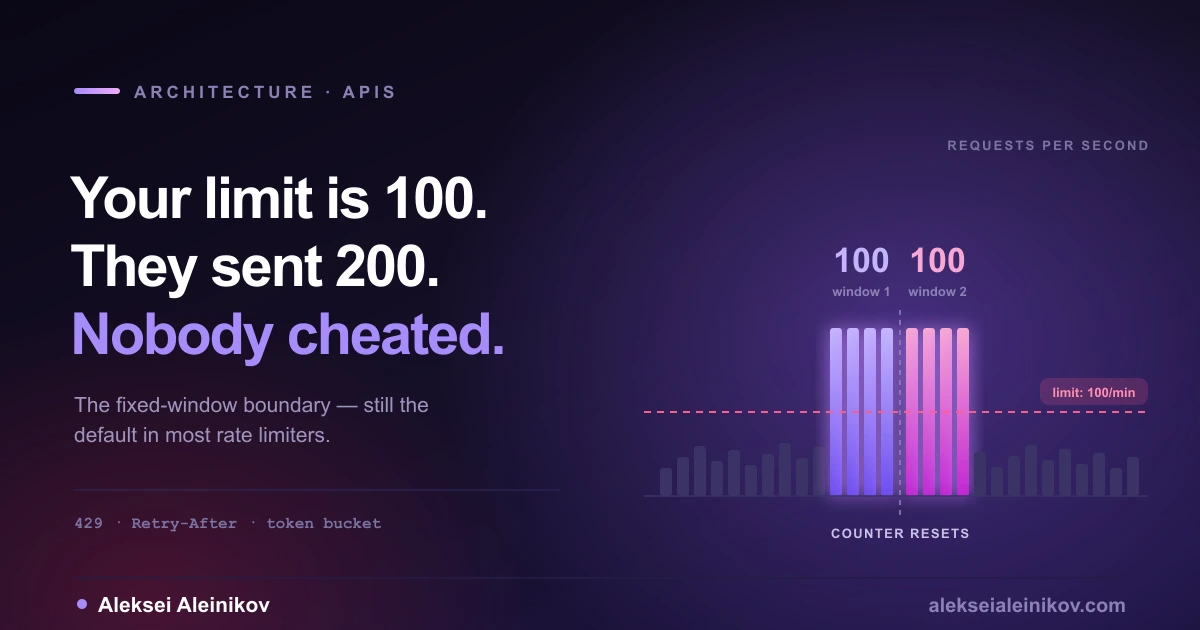
Rate Limiting in Practice: The Algorithm Matters Less Than What You Return
Four algorithms, one race condition, and the header everyone gets wrong. What RFC 6585 actually says about 429, and why X-RateLimit-* is not the standard you think it is.
Read article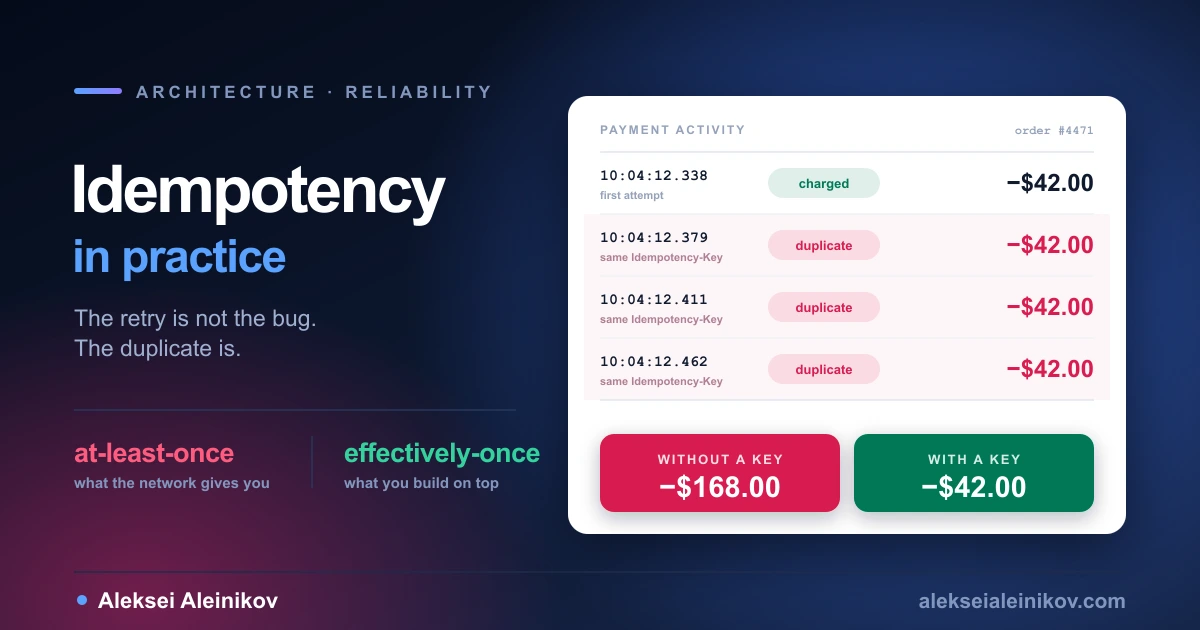
Idempotency in Practice: Why Your Retry Just Charged the Customer Twice
Idempotency is not a header you add. It is a property your storage layer either has or doesn't. What RFC 9110 actually says, how Stripe's model works, and the race condition that breaks most implementations.
Read article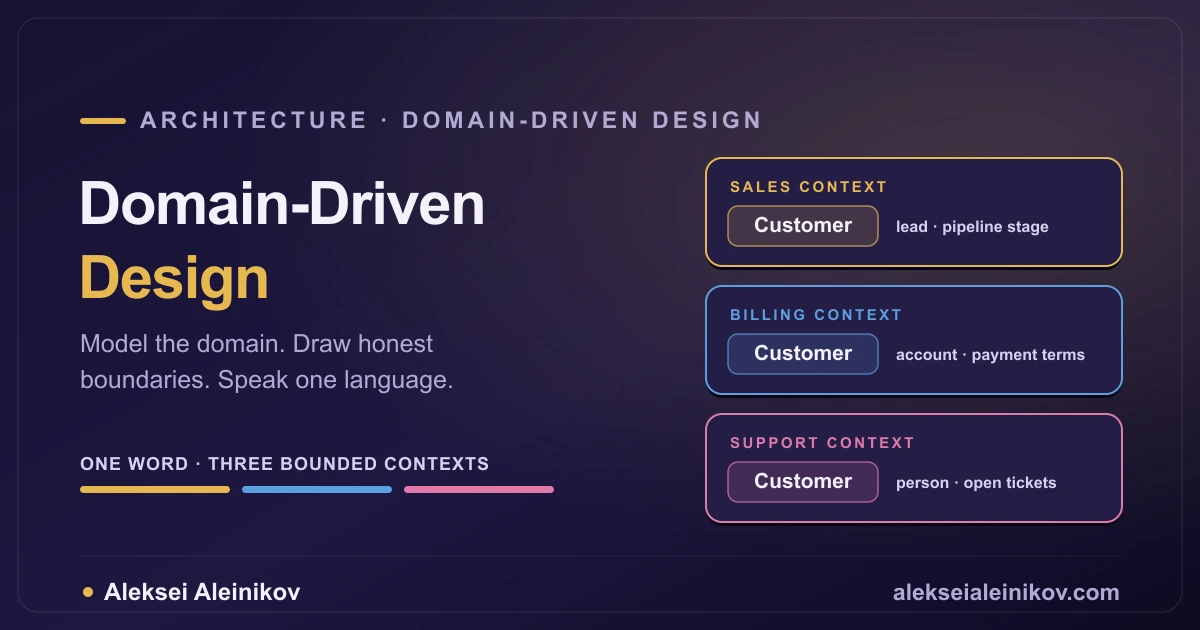
Domain-Driven Design in 2026: A Practical Guide
Domain-Driven Design is not a folder structure or a bag of patterns. It's a way to align software with the business. A practical 2026 guide: strategic vs tactical DDD, bounded contexts, aggregates, when it's worth it, and how to start — no jargon.
Read article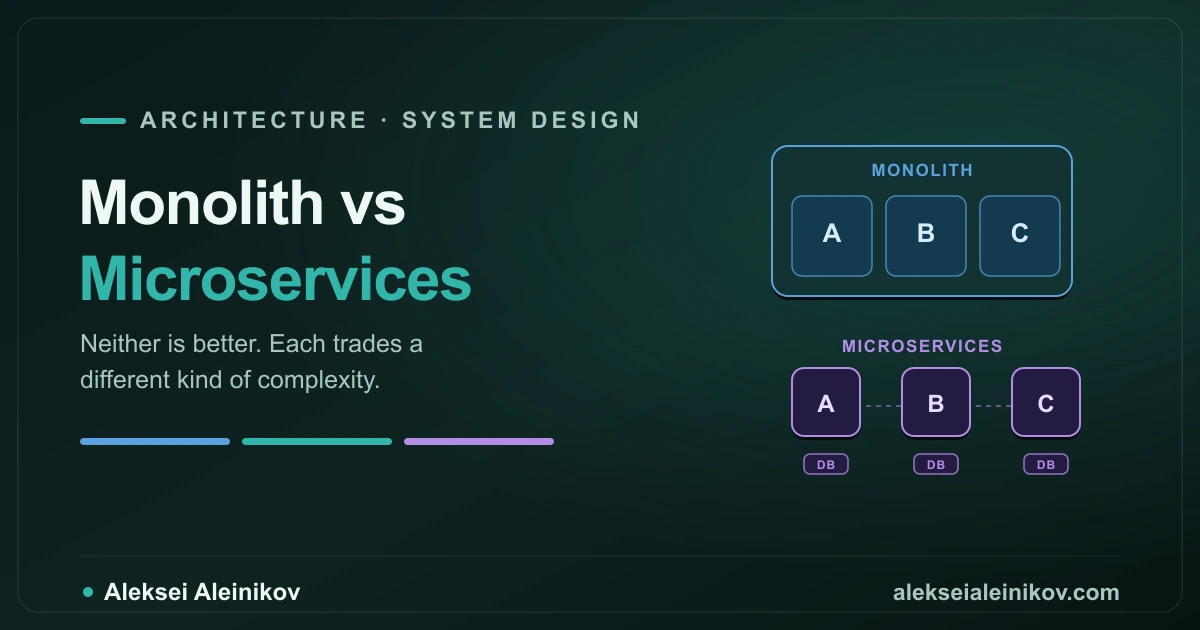
Monolith vs Microservices in 2026: The Honest Trade-offs
Neither a monolith nor microservices is 'modern' or 'legacy'. Each trades one kind of complexity for another. An honest 2026 guide: the real trade-offs, where each wins, the anti-patterns, and a decision framework — no dogma.
Read article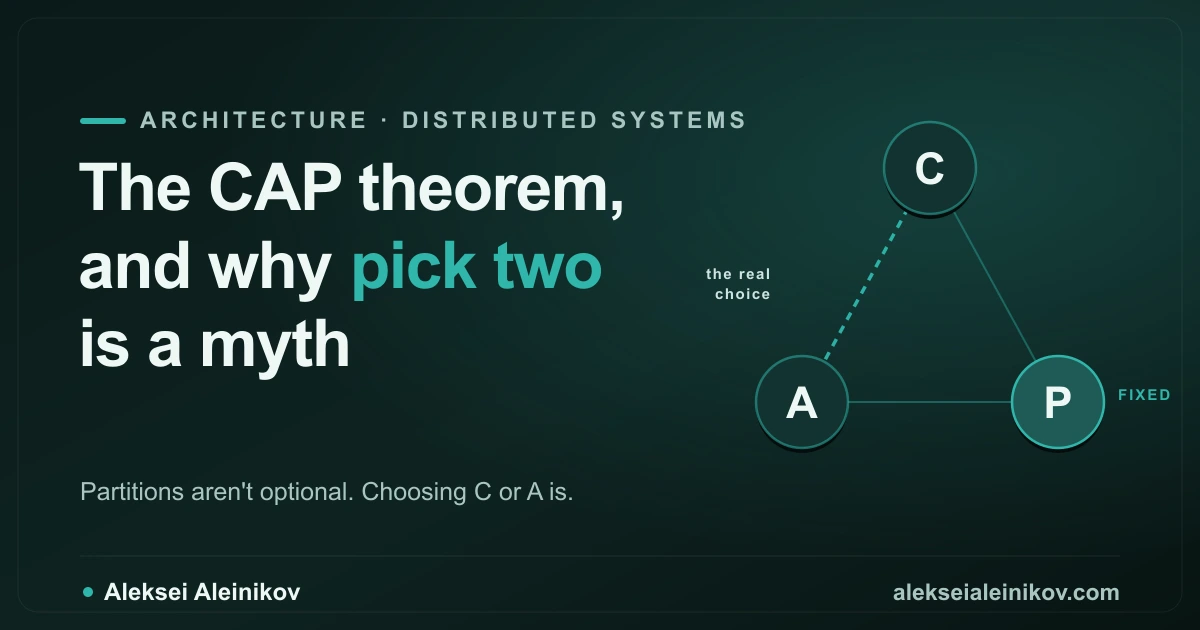
The CAP Theorem, Honestly: What It Really Means When You Pick a Database
The CAP theorem is not 'pick two of three.' Partitions aren't optional, so the real choice is consistency vs availability during a network split — plus PACELC for the 99% of the time nothing is broken. A practical guide to choosing a database.
Read article
How to Send 1,000,000 Notifications Without Falling Over
A vendor-neutral system-design walkthrough of the message-queue architecture that sends a million notifications without taking your API down: fan-out workers, back-pressure, retries, and dead-letter queues.
Read article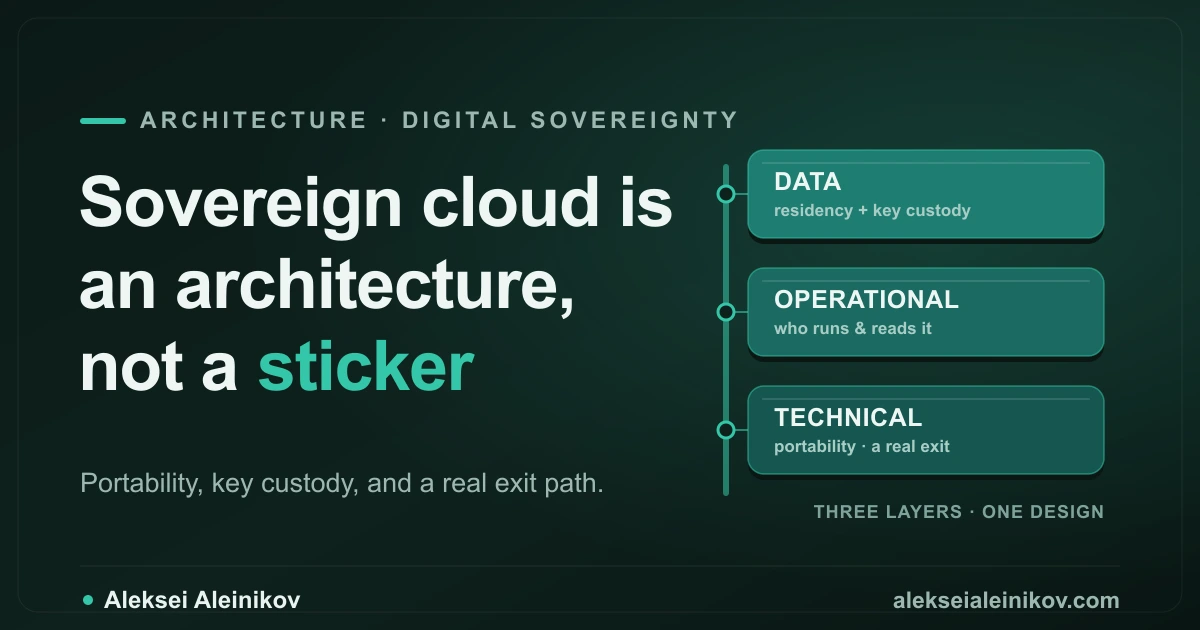
Sovereign by Design: Building a Sovereign Platform on Kubernetes
A practical 2026 architecture for digital sovereignty: treat sovereign cloud as three layers — data, operational, technical — and use Kubernetes, external key custody, and a real exit path to make sovereignty a design property instead of a marketing sticker.
Read article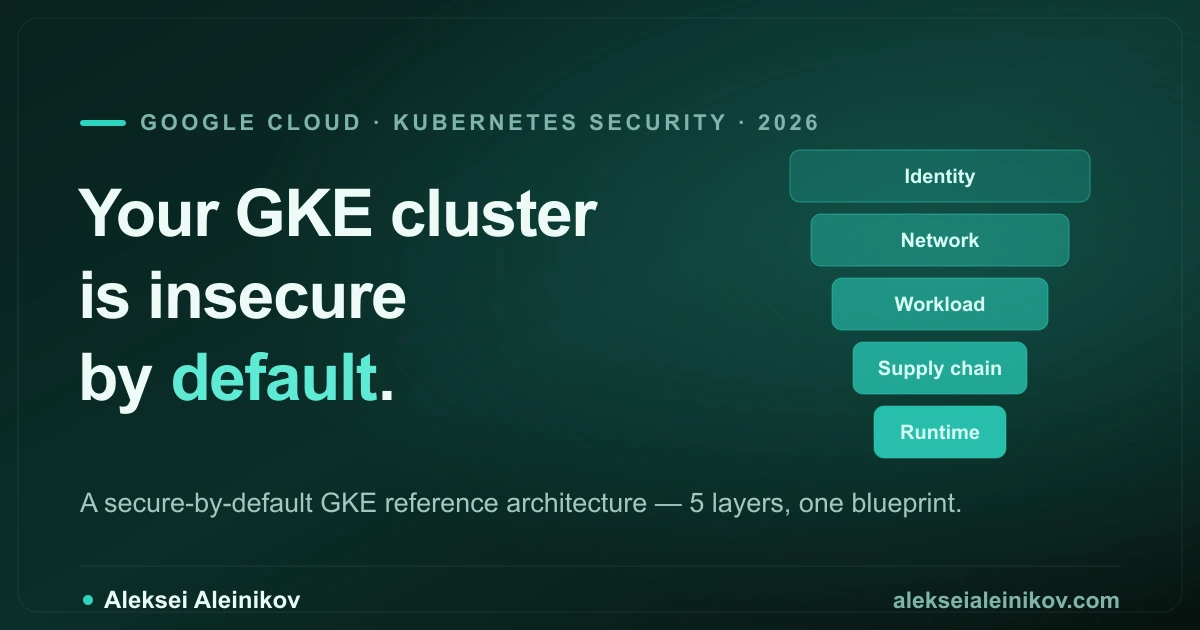
Secure-by-Default GKE: A Reference Architecture for 2026
A practical secure-by-default GKE reference architecture for 2026: defense in depth across identity, network, supply chain, admission, runtime, and observability — with Workload Identity Federation and Binary Authorization at the core.
Read article
Pub/Sub or Eventarc? Event-Driven GCP Without the Spaghetti
When to reach for Pub/Sub, when for Eventarc, and how to keep an event-driven GCP system clean: idempotency, dead-letter queues, and the trap of fan-out spaghetti.
Read article
FAQ
Before you reach out
What is your architecture background?
12+ years designing and operating platforms at scale in large enterprise environments, as a Google Cloud Ambassador, 5× Google Cloud Professional certified. I get the hard, hard-to-reverse decisions right so the system stays cheap to change for years.
Are you open to a permanent role?
Yes — I am looking for a permanent, full-time role as a senior cloud or solutions architect in the DACH region (Germany, Austria, Switzerland): on-site, hybrid or remote, and ready to relocate. I work fluently in English.
How do we start the conversation?
Send me the role on the contact page — the systems, the team and the decisions ahead — and I will reply with my CV and how I would approach the first months.
Open to permanent roles · DACH
Hiring a senior cloud architect in DACH?
Service boundaries, event-driven design and resilience for platforms that must stay cheap to change. I am looking for a permanent role in Germany, Austria or Switzerland — and ready to relocate.
- Permanent, full-time
- Germany · Austria · Switzerland
- Ready to relocate