
DevOps14 articlesEN · DE
Kubernetes, GitOps and platform engineering — what holds up in production
DevOps stopped being about scripts long ago — it is about building a platform other engineers can ship on safely and fast. This hub is mostly Kubernetes: choosing a CNI and a distribution, autoscaling, version upgrades and sandboxing untrusted workloads — plus GitOps with Argo CD, infrastructure as code, DORA metrics and supply-chain security. All of it from designing and operating delivery platforms at enterprise scale.
Start here
Your path through DevOps
A short reading order — from the fundamentals to production depth.
Latest articles
All 14 articles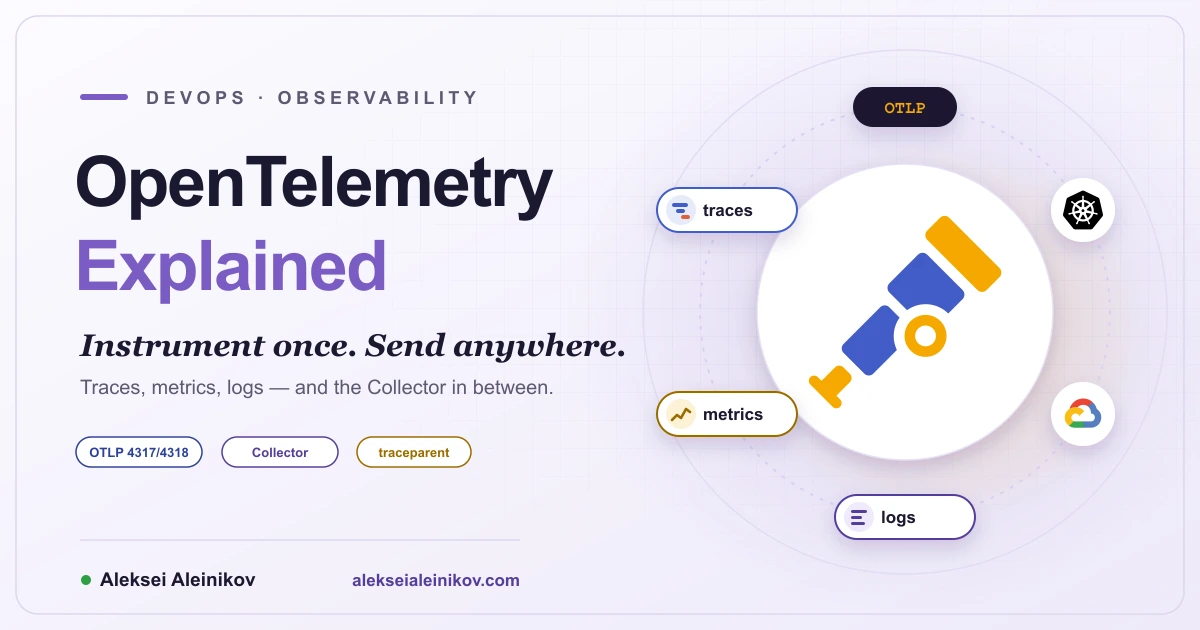
OpenTelemetry Explained: Traces, Metrics, Logs and the Collector
What OpenTelemetry is and is not, how traces, metrics and logs fit together, how the API, SDK, OTLP and the Collector move data, agent vs gateway deployments, zero-code instrumentation on Kubernetes, sampling, and the production mistakes that make observability expensive.
Read article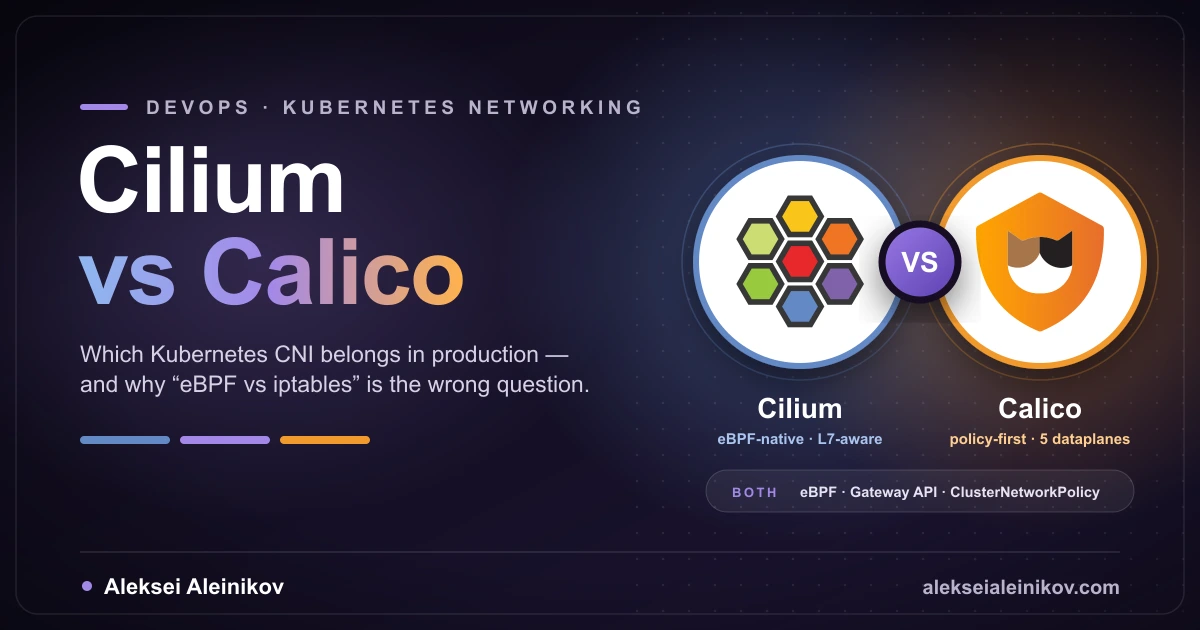
Cilium vs Calico: Which Kubernetes CNI Should Run Your Production Cluster?
Cilium 1.20 and Calico 3.33 shipped within weeks of each other, and the old "eBPF vs iptables" framing no longer describes either. A production comparison: dataplanes, network policy models, observability, encryption, Gateway API, what GKE, EKS and AKS actually run, and the migration traps nobody mentions.
Read article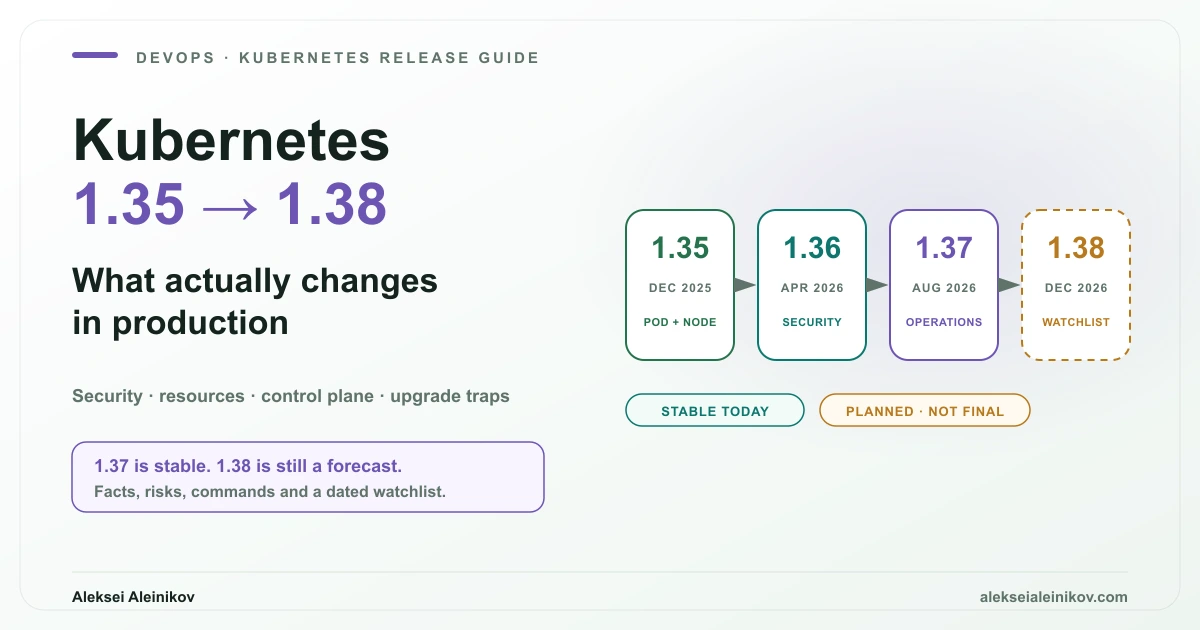
Kubernetes 1.35 to 1.38: What Actually Changes in Production
Kubernetes 1.35, 1.36 and 1.37 changed far more than their release-note headlines suggest. A production-focused map of security defaults, autoscaling, AI scheduling, storage, control-plane resilience, upgrade traps, and the still-moving 1.38 release.
Read article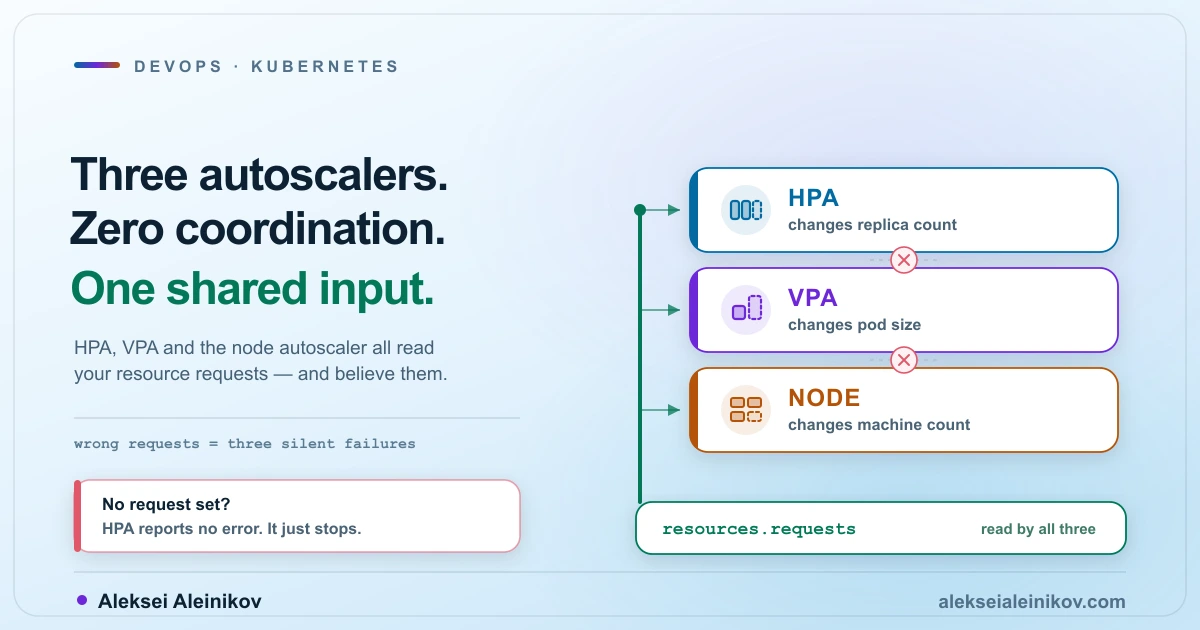
Kubernetes Autoscaling: Three Controllers That Do Not Talk to Each Other
HPA, VPA and the node autoscaler all read resource requests, none of them coordinate, and every one of them fails silently when requests are wrong. The mechanics that decide whether your cluster scales or just thrashes.
Read article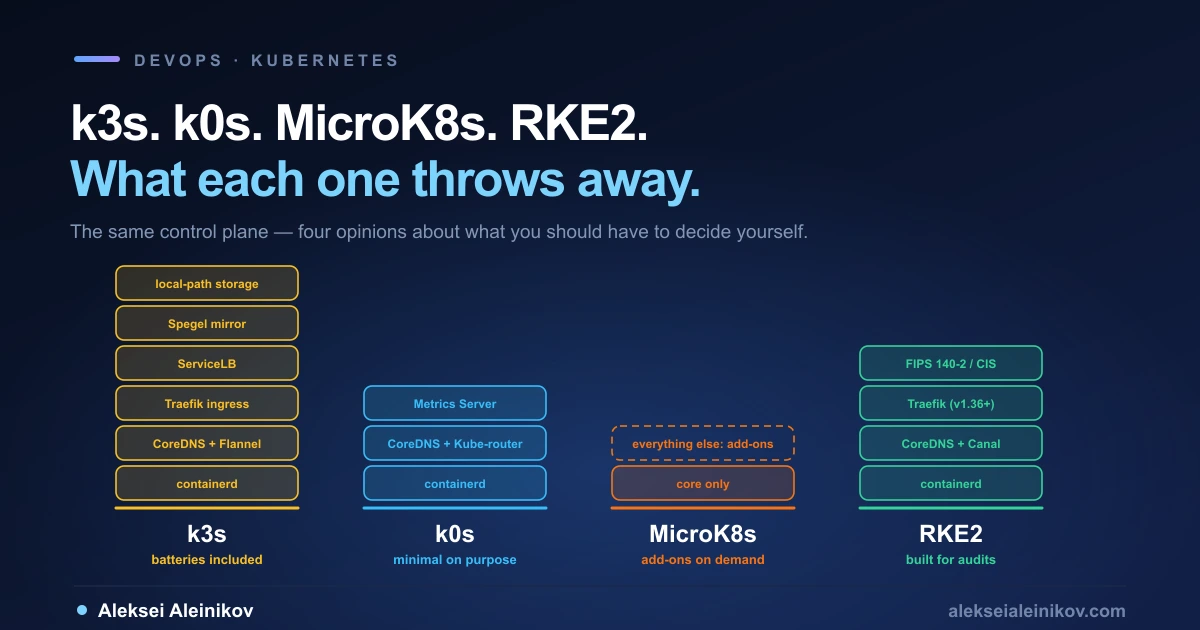
k3s vs k0s vs MicroK8s vs RKE2: Which Kubernetes to Install When You Don't Need the Full One
A practical comparison of the four lightweight Kubernetes distributions that matter in 2026. Not a feature list: what each one actually removes, why k3s and k0s share the same database shim, which one isolates the control plane by default, and the Ingress NGINX end-of-life that just changed RKE2's defaults.
Read article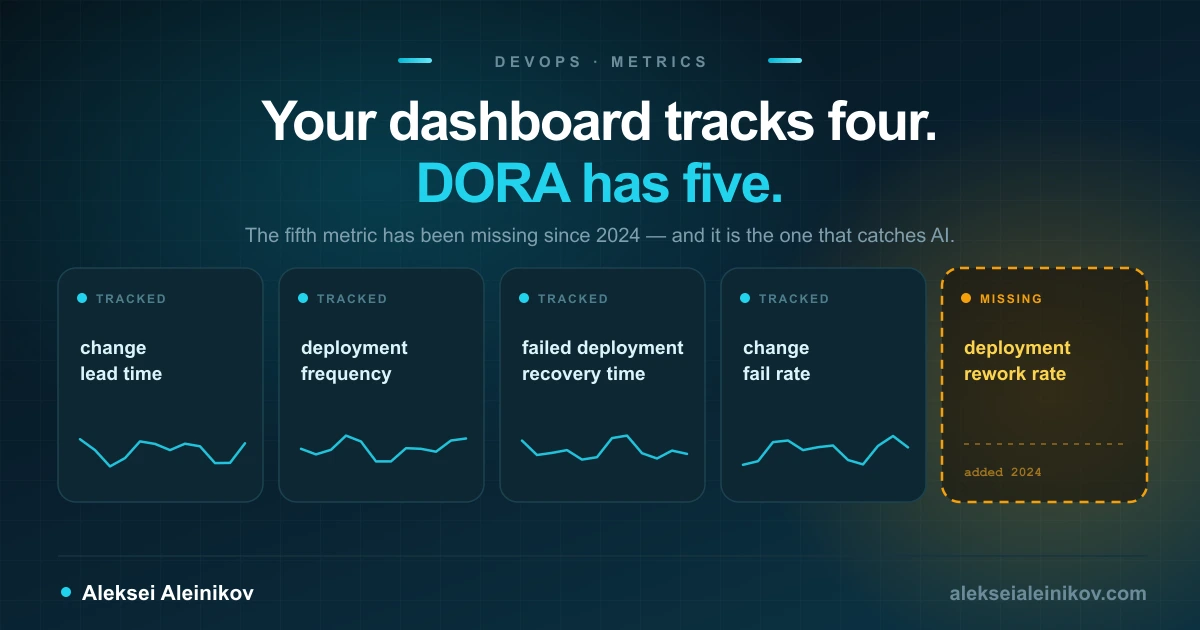
DORA Metrics in 2026: Why Four Became Five (and What Most Dashboards Still Get Wrong)
DORA's four key metrics quietly became five in 2024, and one of them moved out of the category everyone still puts it in. A practical guide to what changed, why recovery time is now a throughput measure, how to compute each metric from your own Git and deployment data, and the ways these numbers break the moment they become someone's performance target.
Read article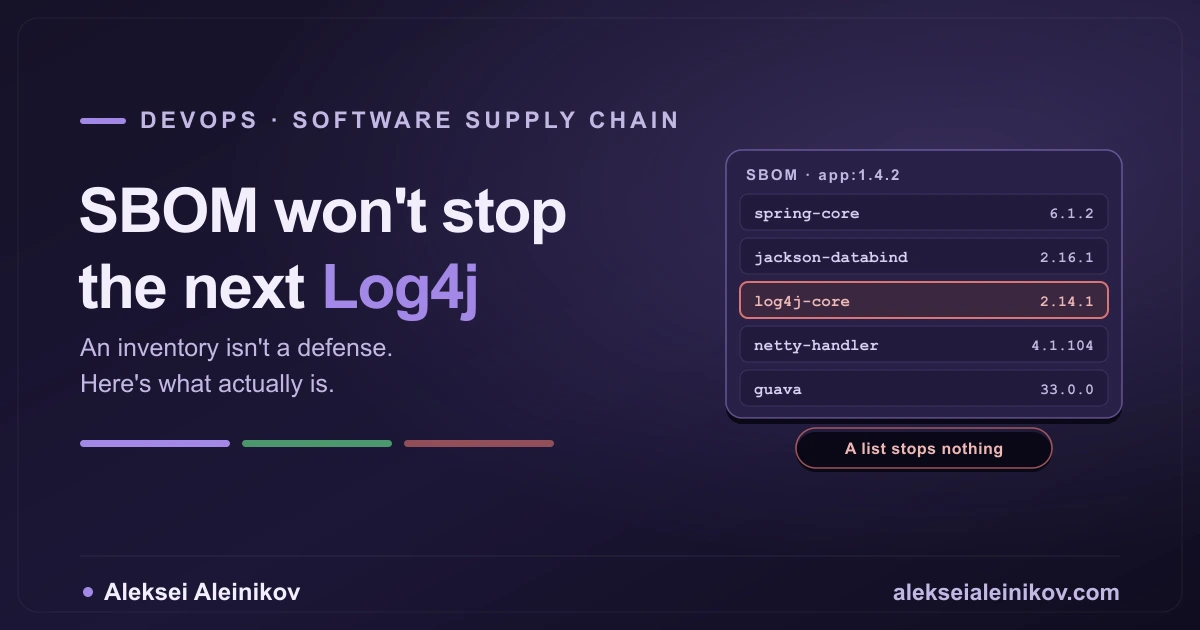
SBOM Won't Stop the Next Log4j — Here's What Actually Would
An SBOM is an inventory, not a defense. Generating one would not have stopped Log4Shell. What would: continuous CVE correlation, signed provenance, and VEX to kill the noise. A practical supply-chain security guide for 2026.
Read article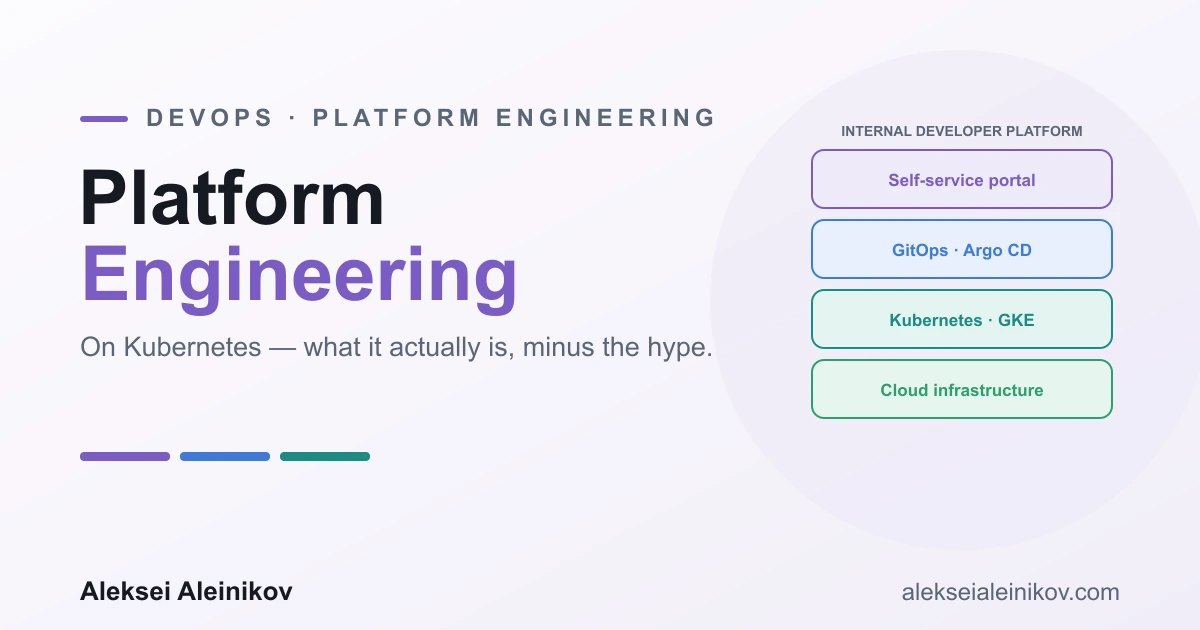
Platform Engineering on Kubernetes: What It Actually Is (and How to Build the Platform)
Platform engineering on Kubernetes, explained without the hype: what an Internal Developer Platform actually is, how it differs from DevOps and SRE, the anatomy of an IDP, golden paths, a comparison table, and an honest answer to whether you even need one.
Read article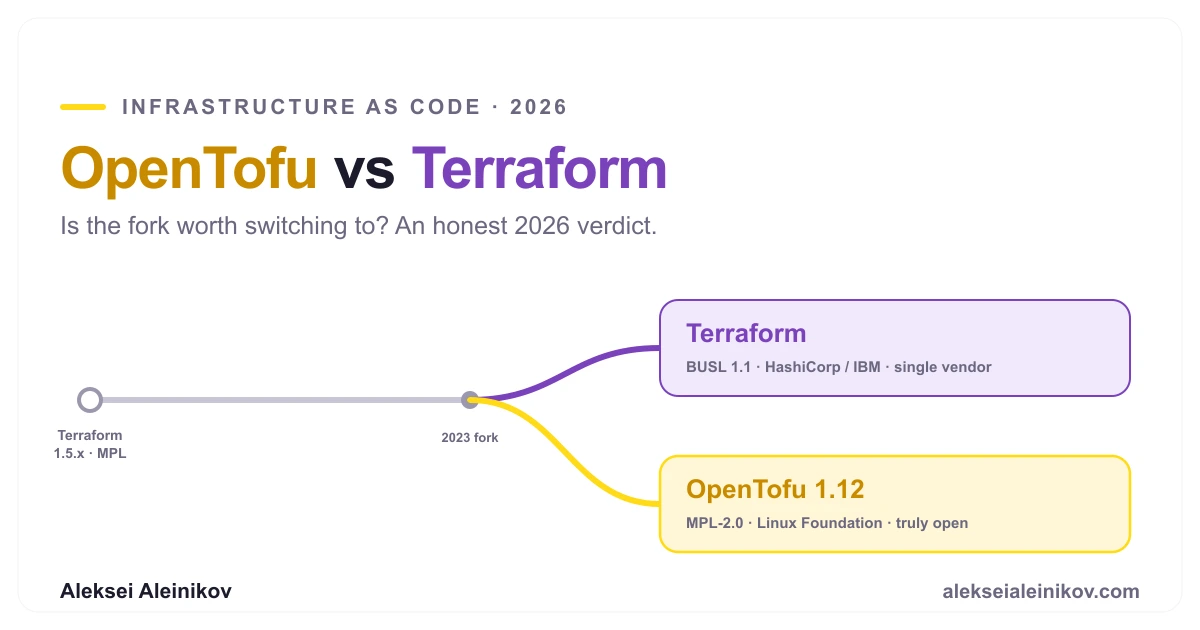
OpenTofu vs Terraform in 2026: Is the Fork Worth Switching To?
OpenTofu vs Terraform in 2026: why the fork happened, what actually differs (state encryption, provider for_each, licensing), a comparison table, and an honest verdict on switching.
Read article
Podman in 2026: Rootless, Daemonless Containers Without Docker
A hands-on 2026 guide to Podman: why daemonless and rootless containers are safer, how user-namespace UID mapping works, and how Quadlet lets systemd run your containers instead of a background daemon.
Read article
Build a Tiny Linux Container without Docker in 2026
A hands-on 2026 walkthrough for building a tiny isolated Linux container with overlayFS, cgroups, namespaces, pivot_root, and kernel primitives instead of Docker.
Read article
microVMs Explained: Firecracker vs gVisor for Secure Workloads in 2026
A practical 2026 comparison of Firecracker microVMs and gVisor for secure workload isolation: how each sandbox works, the security and performance trade-offs, and when to choose KVM-based VMs over a userspace kernel.
Read article
FAQ
Before you reach out
What is your platform engineering background?
I design and operate production delivery platforms at enterprise scale — GitOps with Argo CD, hardened GitLab CI/CD and Kubernetes — as a Google Cloud Ambassador, 5× Google Cloud Professional certified.
Are you open to a permanent role?
Yes — I am looking for a permanent, full-time role as a senior platform or DevOps engineer in the DACH region (Germany, Austria, Switzerland): on-site, hybrid or remote, and ready to relocate. I work fluently in English.
How do we start the conversation?
Send me the role on the contact page — the platform, the pipelines and the team — and I will reply with my CV and how I would approach the first months.
Open to permanent roles · DACH
Hiring a senior platform engineer in DACH?
GitOps with Argo CD, hardened CI/CD and Kubernetes in production at enterprise scale. I am looking for a permanent role in Germany, Austria or Switzerland — and ready to relocate.
- Permanent, full-time
- Germany · Austria · Switzerland
- Ready to relocate