
AI25 articlesEN · DE
LLMs in production — picking models, building agents, self-hosting
The hard part of AI in production is not calling a model — it is picking the right one, giving it the right context and trusting the result. This hub has three tracks: model comparisons on price and benchmarks (Claude, GPT, open-weight), agents and tooling (MCP, Agent Skills, coding agents), and running models yourself (vLLM, Ollama, quantization, embeddings) — plus RAG for grounding. Written from 12+ years of platform engineering.
Start here
Your path through AI
A short reading order — from the fundamentals to production depth.
Latest articles
All 25 articles
Nouswise vs NotebookLM: When Research Becomes a Workflow
Compare Nouswise and Google NotebookLM by source reuse, citations, research outputs, APIs and cost. A practical route from a document question to a repeatable team workflow.
Read article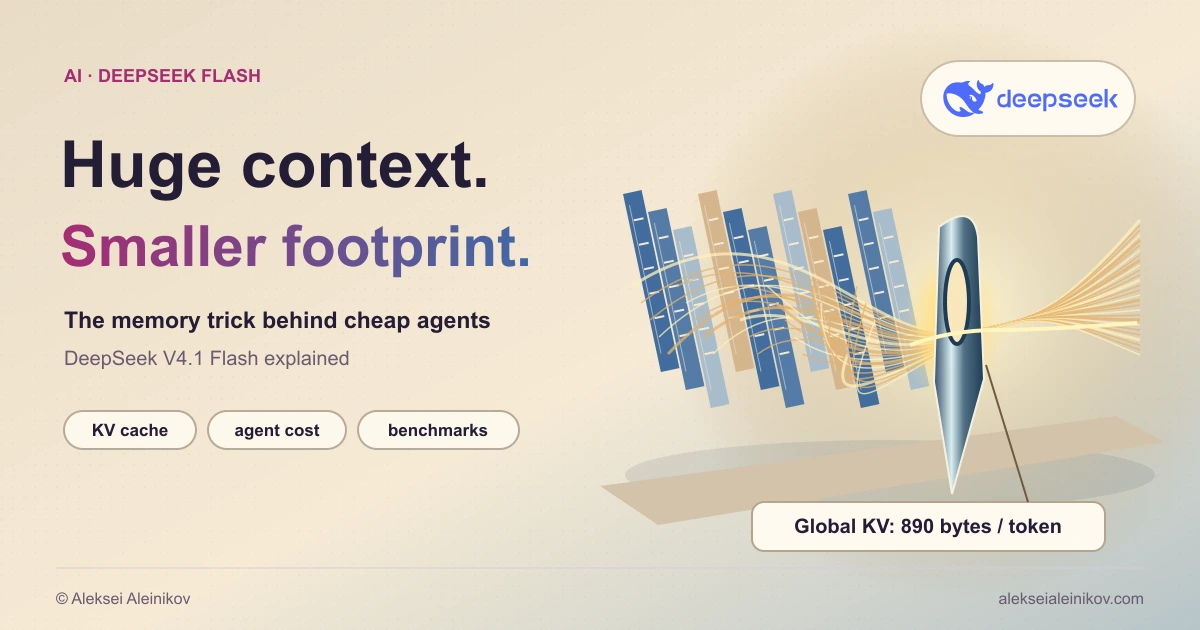
DeepSeek V4.1 Flash Explained: The Memory Trick Behind Cheap Agents
DeepSeek V4.1 Flash explained through its memory architecture, vendor benchmarks and worked agent costs, with practical API integration details.
Read article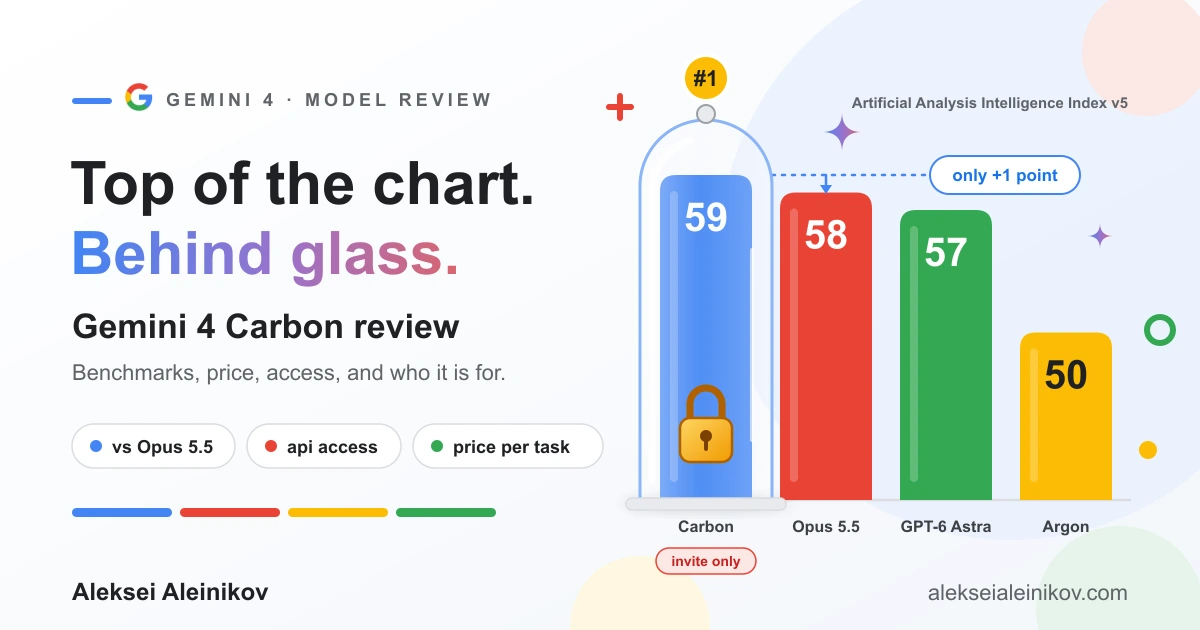
Gemini 4 Carbon Review: Benchmarks, Price, Access and Who It Is Actually For
A plain review of Gemini 4 Carbon, Google's new top model: the benchmark table and who ran each test, cost per task against Claude Opus 5.5 and GPT-6 Astra, why almost nobody can use it yet, how to get access, and who should care.
Read article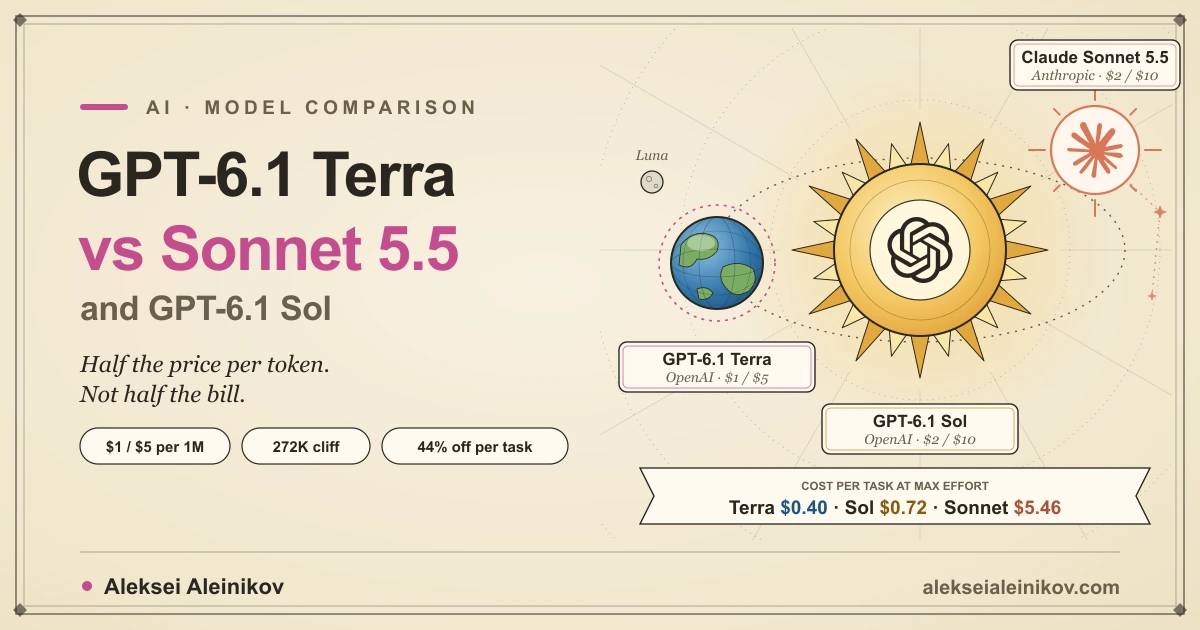
GPT-6.1 Terra vs Claude Sonnet 5.5 vs GPT-6.1 Sol: Half the Price per Token Is Not Half the Bill
GPT-6.1 Terra vs Claude Sonnet 5.5 vs GPT-6.1 Sol compared on official specs, vendor benchmarks, independent Artificial Analysis results and real cost per agent turn: why Terra's half price shrinks to 44% per task, where Sonnet 5.5 still leads, what changes past 272K tokens, and which model to pick.
Read article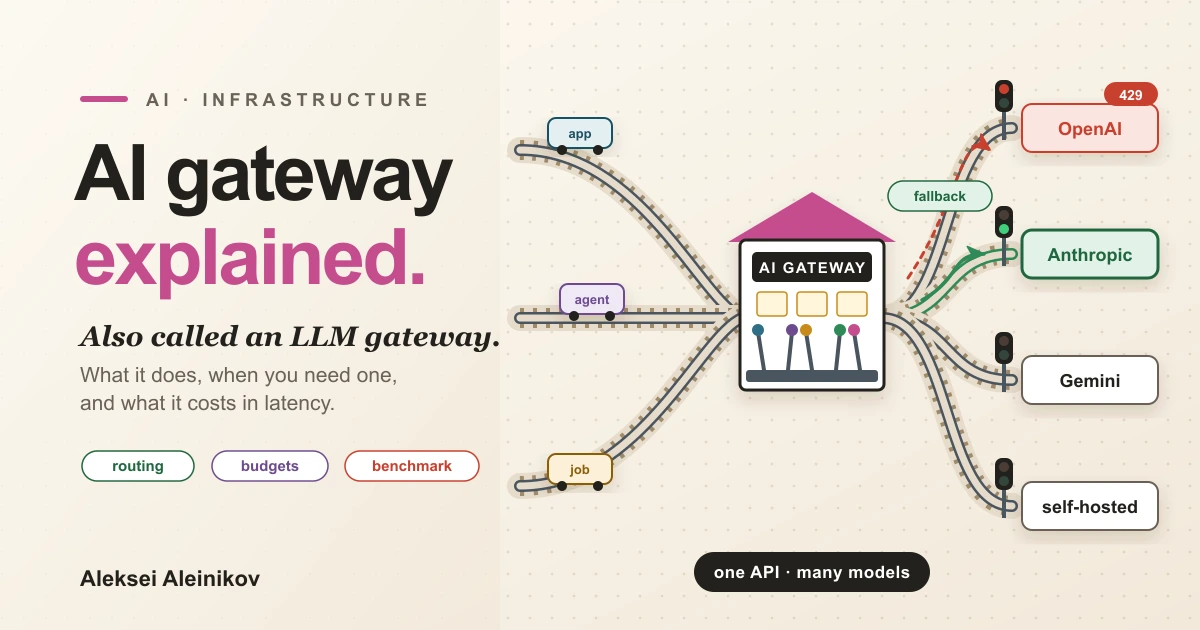
AI Gateway (LLM Gateway) Explained: What It Does, When You Need One and What It Costs
What an AI gateway (LLM gateway) is, what sits inside one, how it differs from an API gateway, when you need one and what breaks in production: streaming, fallback, budgets, caching. With an open benchmark of nginx, Kong, Portkey and LiteLLM on the same mock model, a self-hosted vs managed comparison, and what the LiteLLM 1.107.0 compromise teaches about running one.
Read article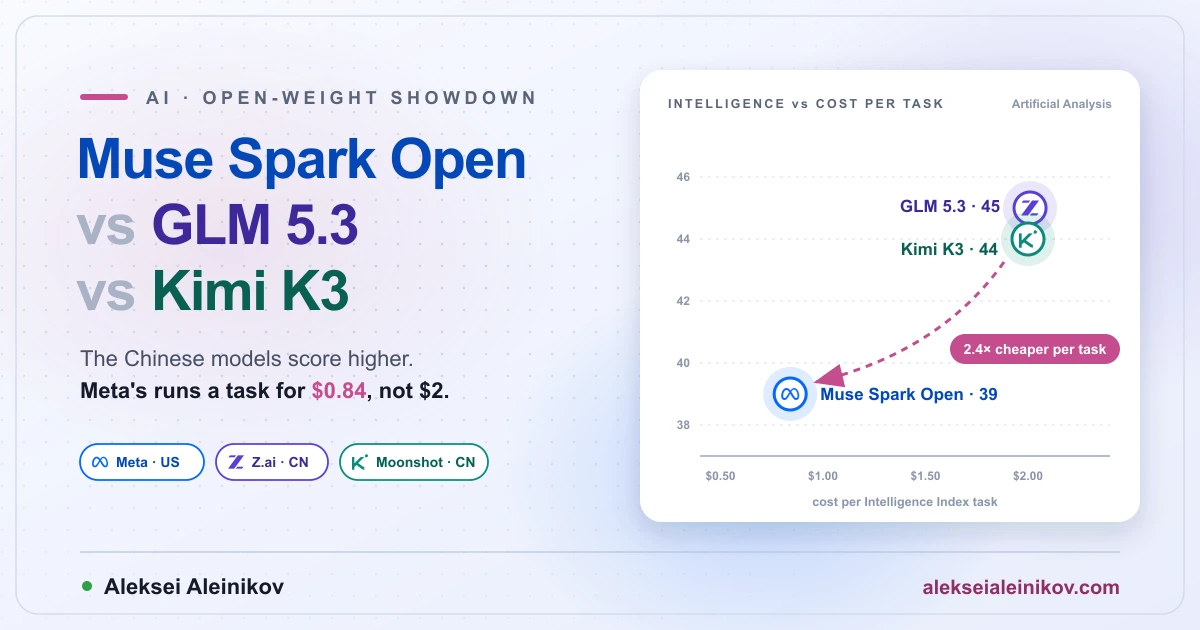
Muse Spark Open vs GLM 5.3 vs Kimi K3: Meta's Open Model Isn't the Smartest. It's the Cheapest to Run
Meta's Muse Spark Open against China's two strongest open-weight models, GLM 5.3 and Kimi K3: independent Artificial Analysis scores, Meta's own benchmark table and why its competitor numbers differ from the vendors', cost per task, the GPU memory each model needs, license fine print and safety results.
Read article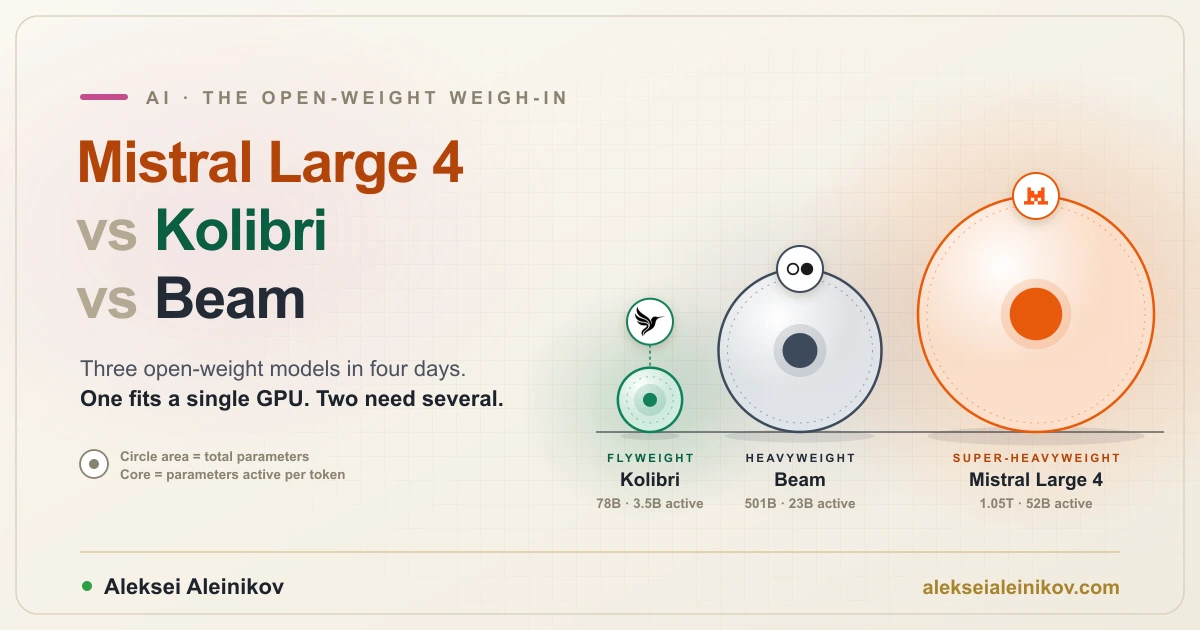
Mistral Large 4 vs Kolibri vs Beam: Three Open-Weight LLMs in Four Days — Which One to Self-Host
Mistral Large 4, Aleph Alpha Kolibri and Reflection Beam compared for self-hosting: release status, licenses, architecture, every benchmark at least two of them share (gaps filled with independent scores), the GPU memory each model needs, and what sovereignty and the EU AI Act mean for each.
Read article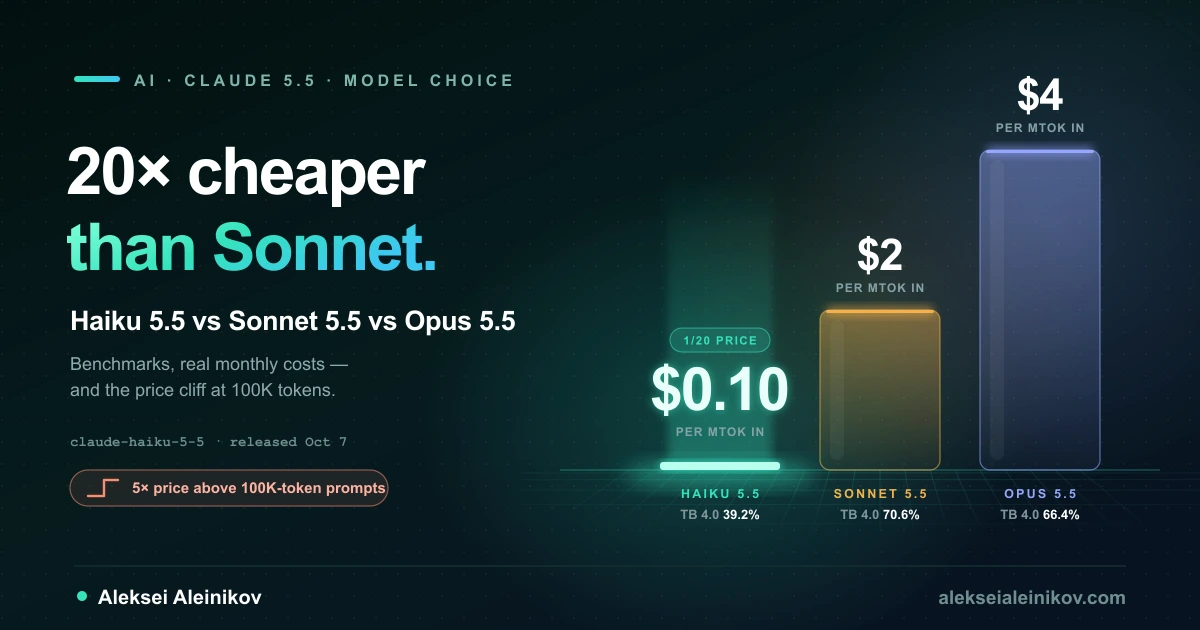
Claude Haiku 5.5 vs Sonnet 5.5 vs Opus 5.5: 20× Cheaper Than Sonnet — and a 100K-Token Price Cliff
Claude Haiku 5.5 vs Sonnet 5.5 vs Opus 5.5 compared on Anthropic's benchmarks, list price and monthly cost for three real workloads, the 100K-token price cliff that only Haiku has, what breaks when you migrate from Haiku 4.5, and how to let Opus plan while Haiku does the work.
Read article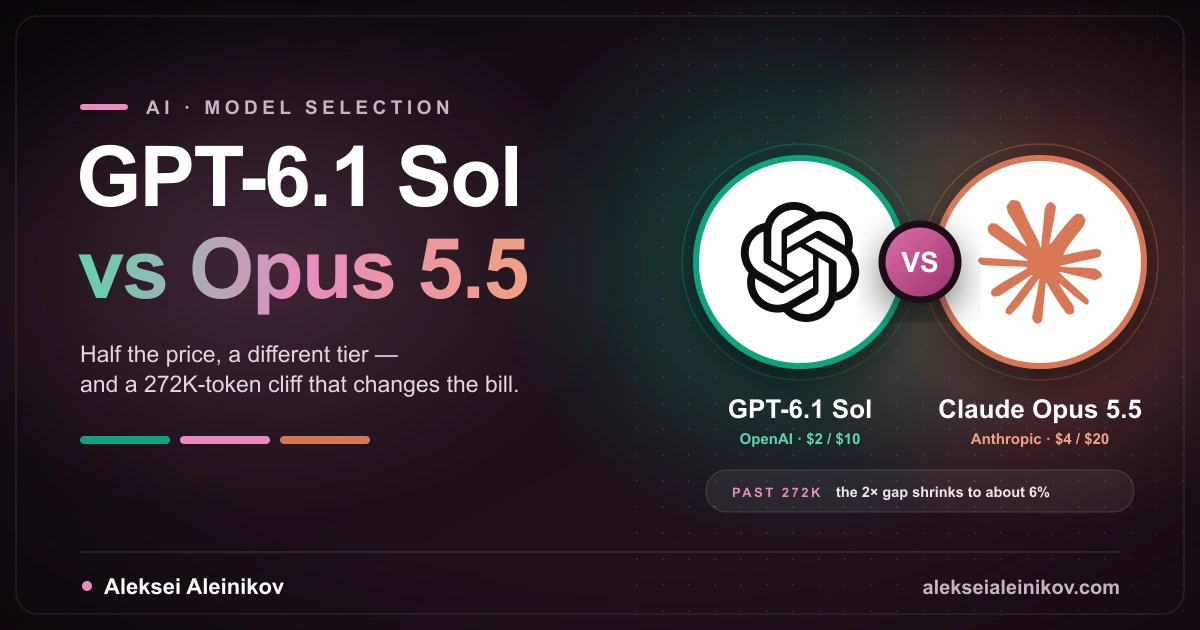
GPT-6.1 Sol vs Claude Opus 5.5: Half the Price, a Different Tier — and Where the Gap Disappears
GPT-6.1 Sol vs Claude Opus 5.5 compared on specs, list price and real cost per agent turn: why Sol is OpenAI's middle model and not a flagship, which benchmarks exist, why the 2× price gap shrinks to about 6% past 272K input tokens, and what EU data residency looks like on each.
Read article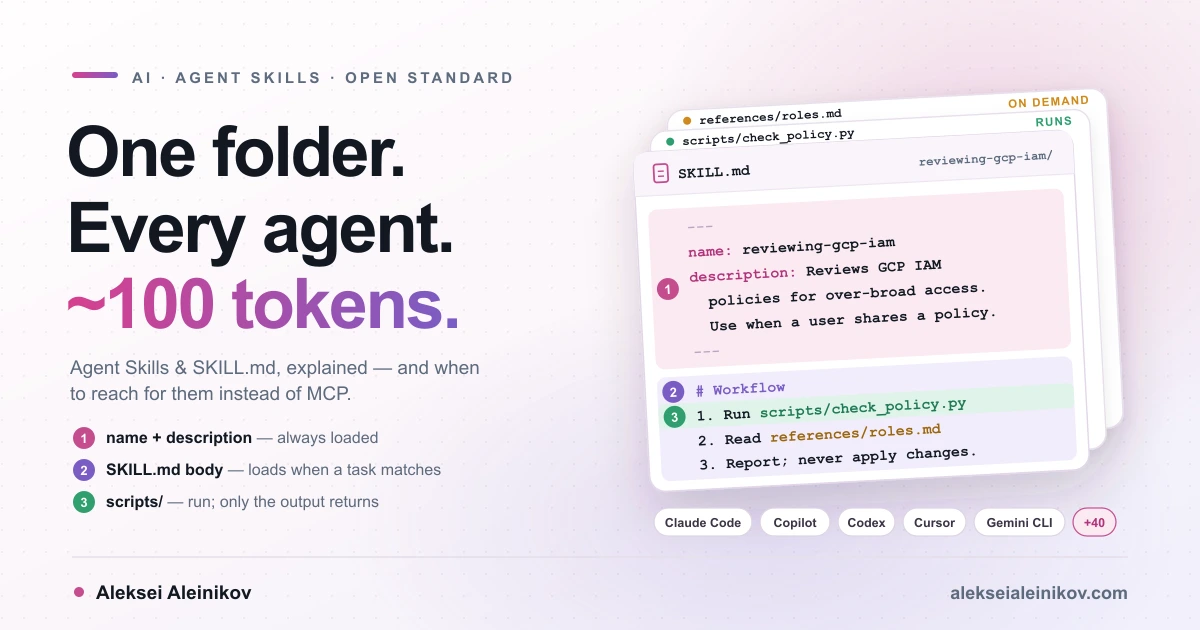
Agent Skills Explained: SKILL.md, Claude Skills and When to Use Them Instead of MCP
Agent Skills are folders with a SKILL.md file that AI agents load on demand. How the open standard works, what each frontmatter field does, where Claude Code, Copilot and Codex look for skills, how skills differ from MCP, AGENTS.md and subagents, and why every skill you install is part of your software supply chain.
Read article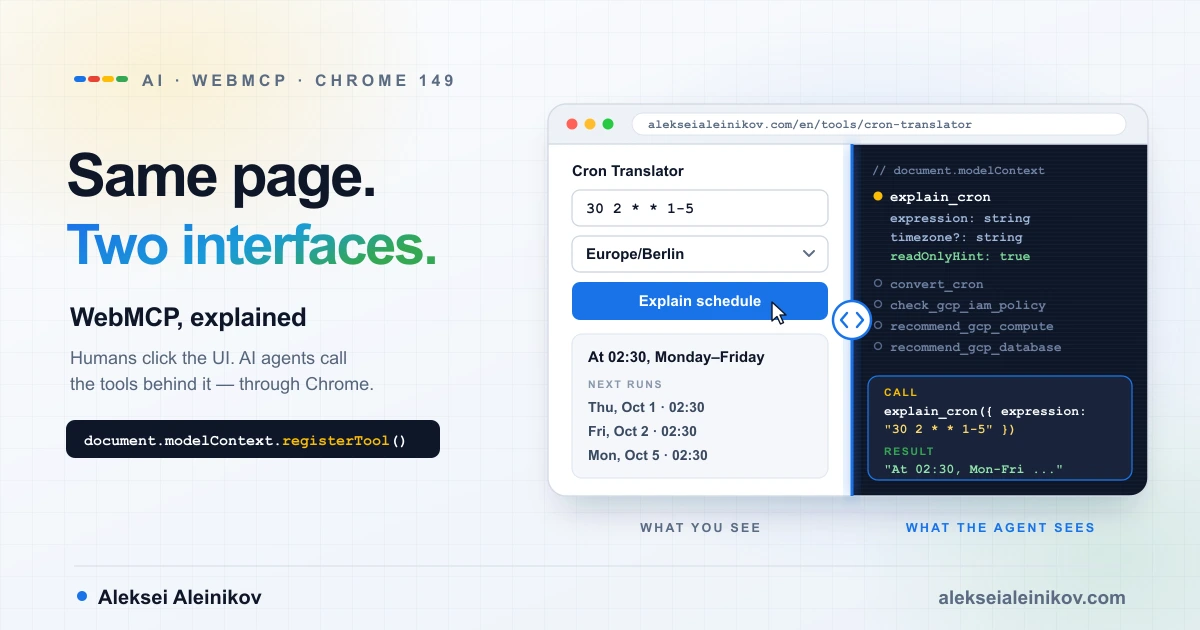
WebMCP Explained: How Chrome Turns Your Website Into an MCP Server for AI Agents
WebMCP explained: how the new browser API lets AI agents call a website's JavaScript as MCP-style tools, how Chrome 149 implements registration, discovery and execution, how WebMCP differs from MCP servers, and what I learned shipping eight WebMCP tools to production.
Read article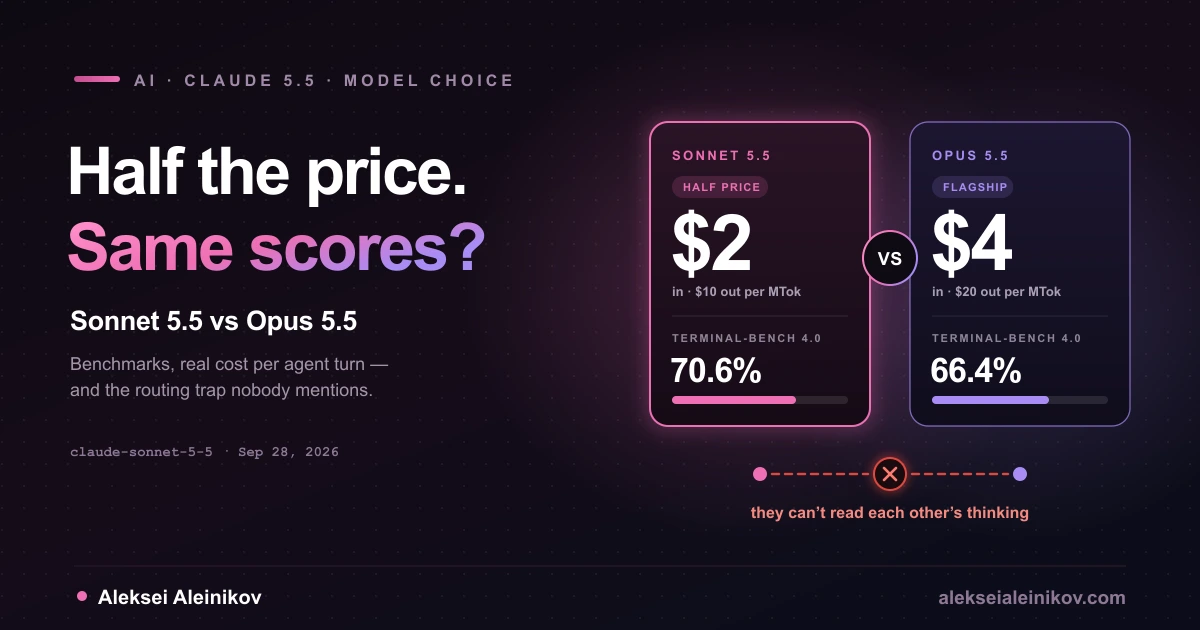
Claude Sonnet 5.5 vs Opus 5.5: Half the Price, Nearly the Same Scores — and a Routing Trap
Claude Sonnet 5.5 vs Opus 5.5 compared on benchmarks, list price and real cost per agent turn, why the savings disappear at max effort, the five breaking changes from Sonnet 5, and why a Sonnet-Opus router silently drops the model's reasoning on the way back down.
Read article
FAQ
Before you reach out
What is your AI engineering background?
I build production AI systems — RAG pipelines, real-time data plumbing and MLOps — combining hands-on AI work (reflected in my CV as an AI engineer) with 12+ years of platform engineering at scale.
Are you open to a permanent role?
Yes — I am looking for a permanent, full-time role as a senior AI platform or MLOps engineer in the DACH region (Germany, Austria, Switzerland): on-site, hybrid or remote, and ready to relocate. I work fluently in English.
How do we start the conversation?
Send me the role on the contact page — what the team is taking from demo to production — and I will reply with my CV and how I would approach the first months.
Open to permanent roles · DACH
Hiring a senior AI platform engineer in DACH?
RAG pipelines, AI infrastructure and MLOps on top of 12+ years of platform engineering. I am looking for a permanent role in Germany, Austria or Switzerland — and ready to relocate.
- Permanent, full-time
- Germany · Austria · Switzerland
- Ready to relocate