
Cloud13 articlesEN · DE
Cloud platform and Google Cloud architecture, proven in production.
The cloud rewards teams that treat it as an architecture, not a hosting bill. As a Google Cloud Ambassador and 5× Google Cloud Professional certified architect running production workloads at enterprise scale, I focus on the decisions that move the needle: managed services that remove toil, reliability designed in before incidents, and cost kept proportional to value.
Start here
Your path through Cloud
A short reading order — from the fundamentals to production depth.
Articles in this hub
Gemini 4 Argon on Google Cloud: What Actually Changes for Platform Teams (2026)
Gemini 4 Argon launched on 30 September 2026 — but only for vetted cyber defenders. What platform teams on Google Cloud should change now: the 1M-token output budget, Argon vs Gemini 3.8 Flash routing, agent guardrails, and the deadlines that land before Argon does.
Read article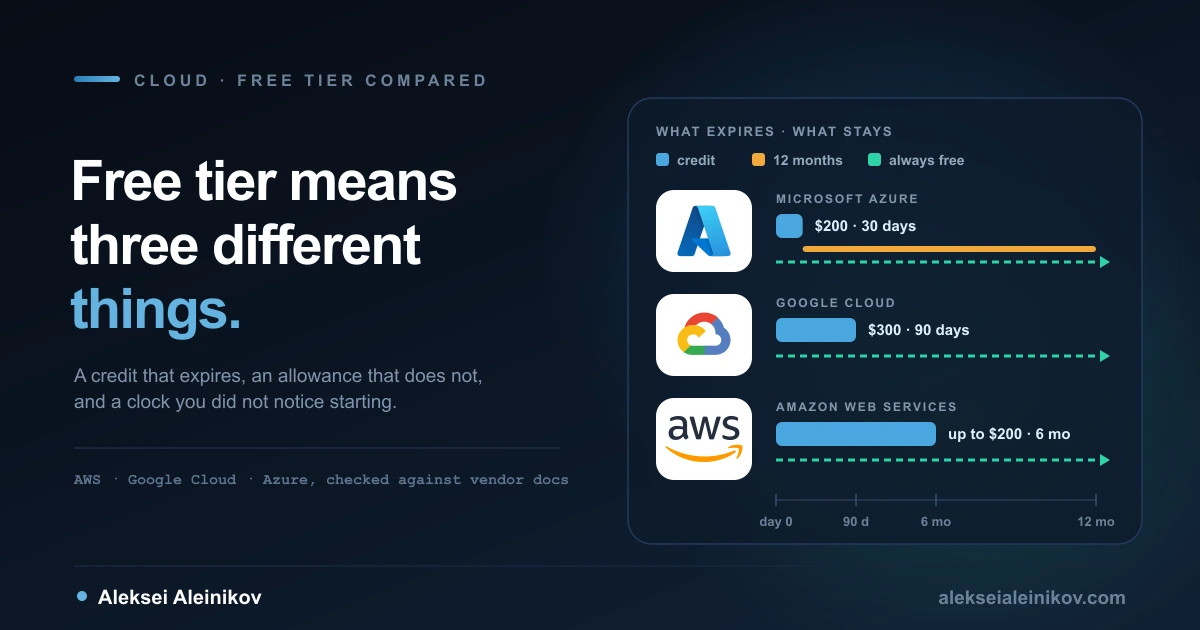
AWS vs Google Cloud vs Azure Free Tier: What Is Actually Free, and What Bills You
AWS, Google Cloud and Azure all say free, but they mean three different things: a credit that expires, a monthly allowance that never does, and a clock you did not notice starting. A side-by-side of the sign-up credits, the always-free limits, what happens on the day the credit ends, and the traps that turn a free account into an invoice.
Read article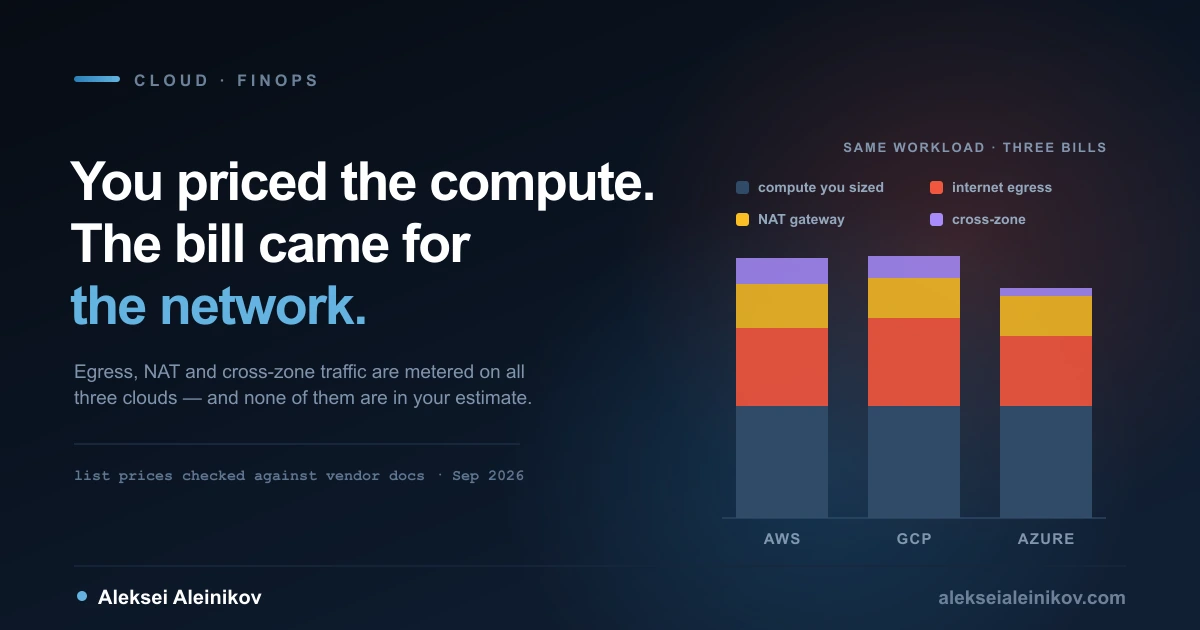
The Cloud Bill You Did Not Estimate: FinOps Across AWS, GCP and Azure
Everyone estimates the compute and gets surprised by the network. A costed comparison of the four meters that actually move a cloud bill — internet egress, NAT, cross-zone traffic and the Kubernetes control plane — priced from the AWS, Google Cloud and Azure documentation, with an honest ranking of what to fix first.
Read article
App Engine vs Cloud Run: Google Picked a Side. Your Bill Might Not Agree
Google now tells new users to pick Cloud Run over App Engine, in the App Engine docs. But at list price an always-on Cloud Run instance costs more per vCPU-hour than App Engine flexible. Here is where the savings actually come from, and what breaks on migration day.
Read article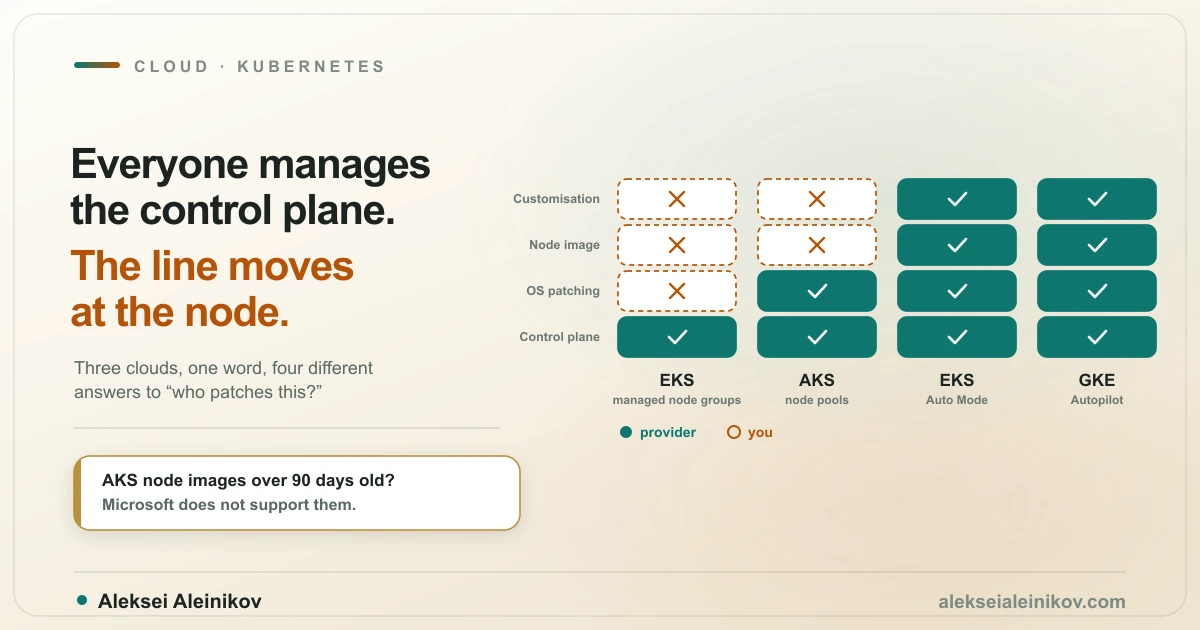
Managed Kubernetes: The Word Is Doing a Lot of Work
All three clouds call their Kubernetes managed, and all three draw the line somewhere different. What the provider actually operates, what quietly stays yours, and the two costs nobody puts on the comparison page.
Read article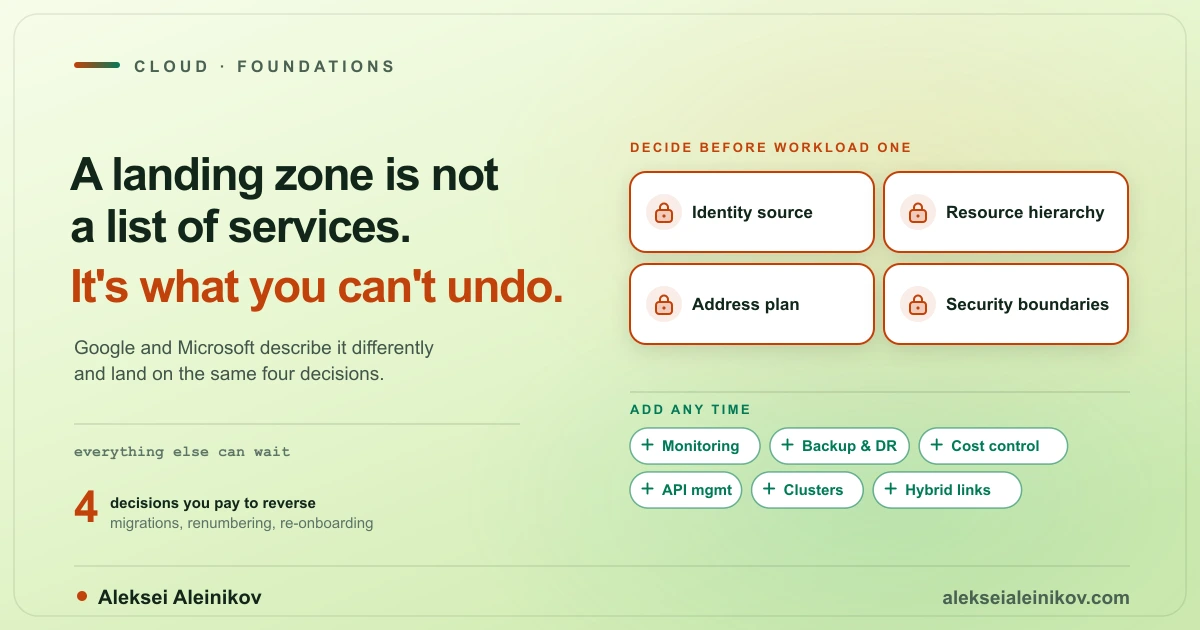
What Actually Belongs in a Landing Zone — and What Gets Pushed Into One for No Reason
A landing zone is not a list of services — it is the set of decisions you cannot reverse later. Azure, AWS and Google describe theirs in different words and converge on the same core, and everything else vendors bundle into the term can be added after your first workload is already running.
Read article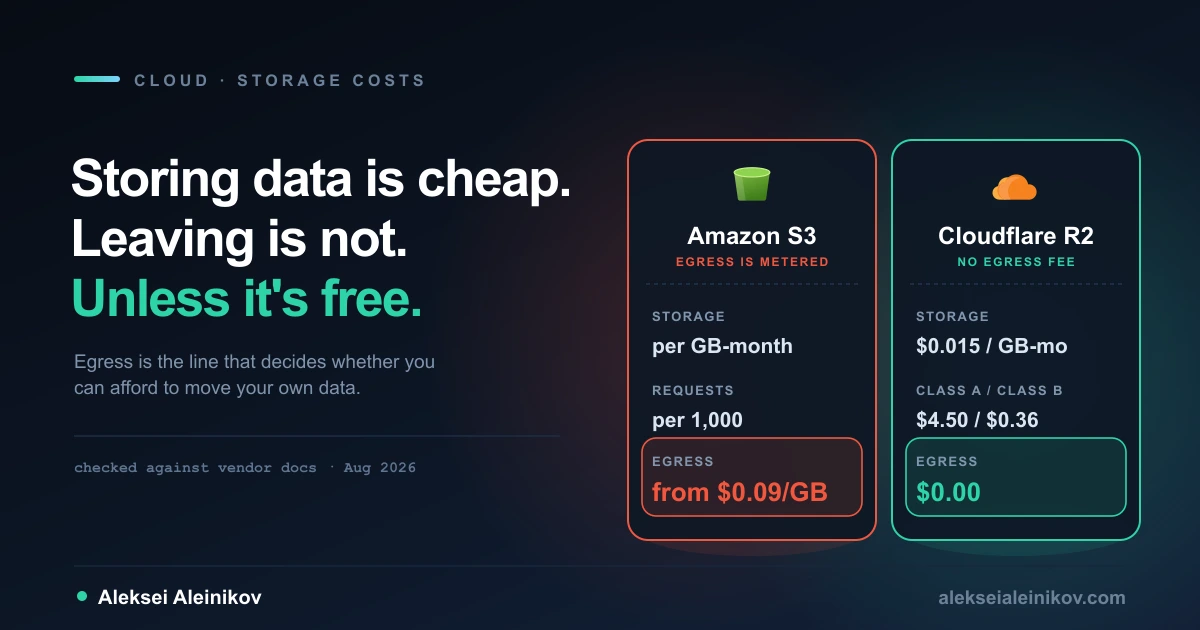
Cloudflare R2 vs S3: What Egress Actually Costs You (and Where R2 Bills Instead)
Egress is the line item that decides whether you can leave a cloud. R2 charges nothing for it and S3 charges per gigabyte — but that is only half the story. A costed comparison of both bills, the fine print that moves the total on each side, and what the EU Data Act changed.
Read article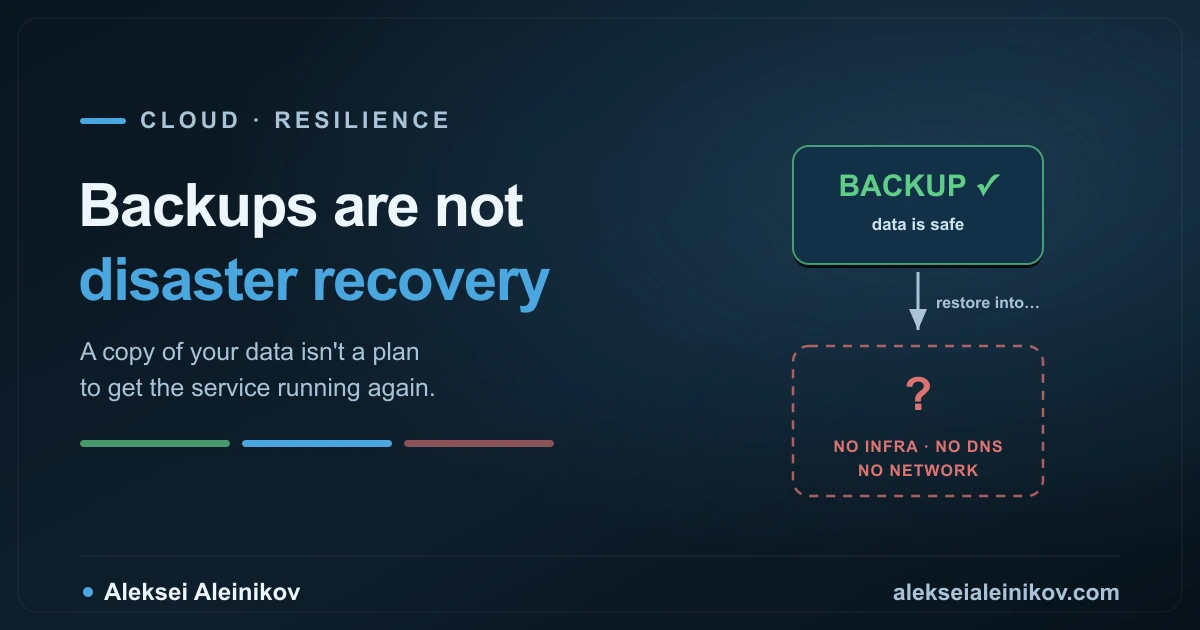
Backups Are Not Disaster Recovery — Here's the Difference That Will Cost You
A backup is a copy of your data. Disaster recovery is getting the whole service running again — infra, network, DNS and all. Confusing the two is a multi-hour outage waiting to happen. RTO vs RPO, the four DR strategies, and why an untested plan is the real failure.
Read article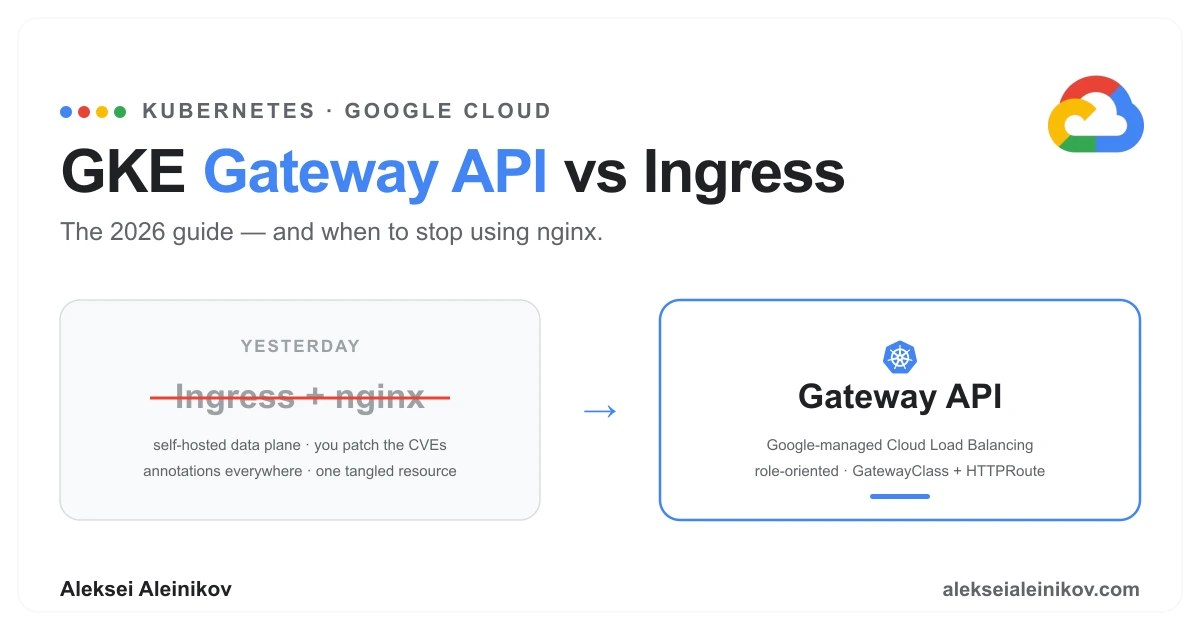
GKE Gateway API vs Ingress 2026: When to Stop Using nginx
GKE Gateway API vs Ingress in 2026: the role-oriented model, the four GatewayClasses, the proxy-only subnet regional clusters need, and when to drop self-hosted nginx.
Read article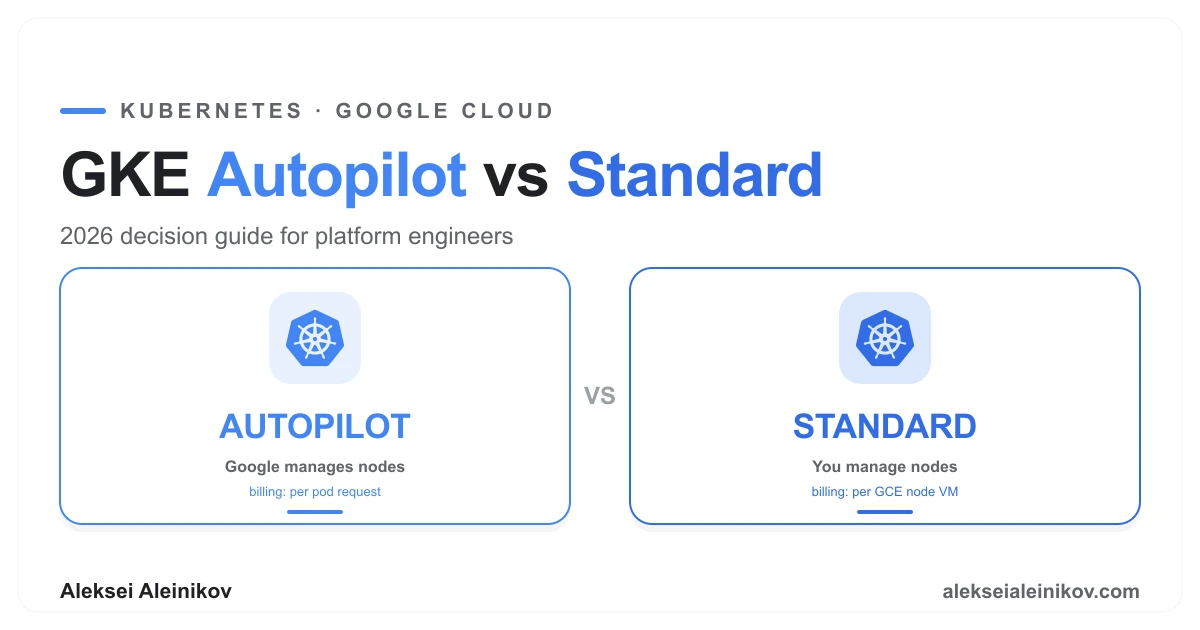
GKE Autopilot vs Standard in 2026: The Real Trade-offs
The real trade-offs between GKE Autopilot and Standard mode in 2026: node ownership, billing models, what Autopilot still cannot do, and a practical decision guide for platform engineers.
Read article
Google ADK in 2026: Building Production AI Agents with the Agent Development Kit
A practical, hands-on look at Google's Agent Development Kit (ADK) in 2026: what it is, how to build a real production agent, how it compares to LangGraph and CrewAI, and what changes when you ship on Gemini Enterprise.
Read article
I Became a Google Cloud Ambassador — Infrastructure: Here Is What It Actually Takes in 2026
A candid look at what it means to become a Google Cloud Ambassador — Infrastructure in 2026: the real criteria, the community work, and what production GCP experience actually looks like at this level.
Read article
Kafka vs Pub/Sub in 2026: When Managed Messaging Saves a Fintech Launch
A 2026 fintech messaging case study: how a Kafka backlog, broker disk pressure, and rebalance storm broke checkout, and why Google Cloud Pub/Sub moved the payment flow out of the danger zone.
Read article
FAQ
Before you reach out
What is your cloud background?
I run production cloud workloads at enterprise scale and am a Google Cloud Ambassador, 5× Google Cloud Professional certified (Architect, Network, Security, DevOps, Data). My focus is the decisions that matter — managed services, reliability and cost at scale.
Are you open to a permanent role?
Yes — I am looking for a permanent, full-time role as a senior cloud or platform engineer in the DACH region (Germany, Austria, Switzerland): on-site, hybrid or remote, and ready to relocate. I work fluently in English.
How do we start the conversation?
Send me the role on the contact page — the platform, the team and what it must deliver — and I will reply with my CV and how I would approach the first months.
Open to permanent roles · DACH
Hiring a senior cloud engineer in DACH?
Google Cloud Ambassador, 5× Google Cloud Professional, production platforms at enterprise scale. I am looking for a permanent role in Germany, Austria or Switzerland — and ready to relocate.
- Permanent, full-time
- Germany · Austria · Switzerland
- Ready to relocate